Stainless Steel vs Plastic Pet Water Fountains: Which Should You Stock?
We build stainless fountains, so you might expect a one-sided answer. You will not get one. Plastic and stainless serve different price points, different customers and different positions in a catalog — but they are not equal, and the differences show up exactly where B2B buyers feel them: returns, reviews and repeat revenue.
Published September 4, 2026 · 5 min read · by the Inoxpaw factory team
The Quick Comparison
| Dimension | Stainless steel (304) | Plastic (BPA-free) |
|---|---|---|
| Hygiene | Non-porous surface; does not retain biofilm the way scratched plastic does | Scratches over time and collects slime films that customers notice |
| Food safety story | Same steel family as commercial kitchens; no BPA discussion to manage | Requires BPA-free certification and still draws consumer concern |
| Durability | Survives drops and daily dishwasher cycles | Cracking and UV yellowing drive a share of warranty claims |
| Weight & stability | Heavier base — harder to tip for large dogs | Light; easy to move, easier to knock over |
| Typical retail price | Premium positioning | Value positioning |
| Margin profile | Higher absolute margin per unit | Higher turn rate at volume |
| Best fit | Multi-pet households, premium brands, gift channel | First-time fountain buyers, budget channel |
Why Demand Is Shifting to Stainless
Three forces — none of them new, all of them accelerating. First, review sentiment: plastic fountain reviews cluster around slime, cracks and feline chin acne, and shoppers read reviews before they read your copy. Second, the pet category keeps premiumizing; a stainless fountain is an easy visual upgrade story. Third, material is now visible in the buying process: “304 stainless” works as a trust signal in listings the way “BPA-free” did a decade ago.
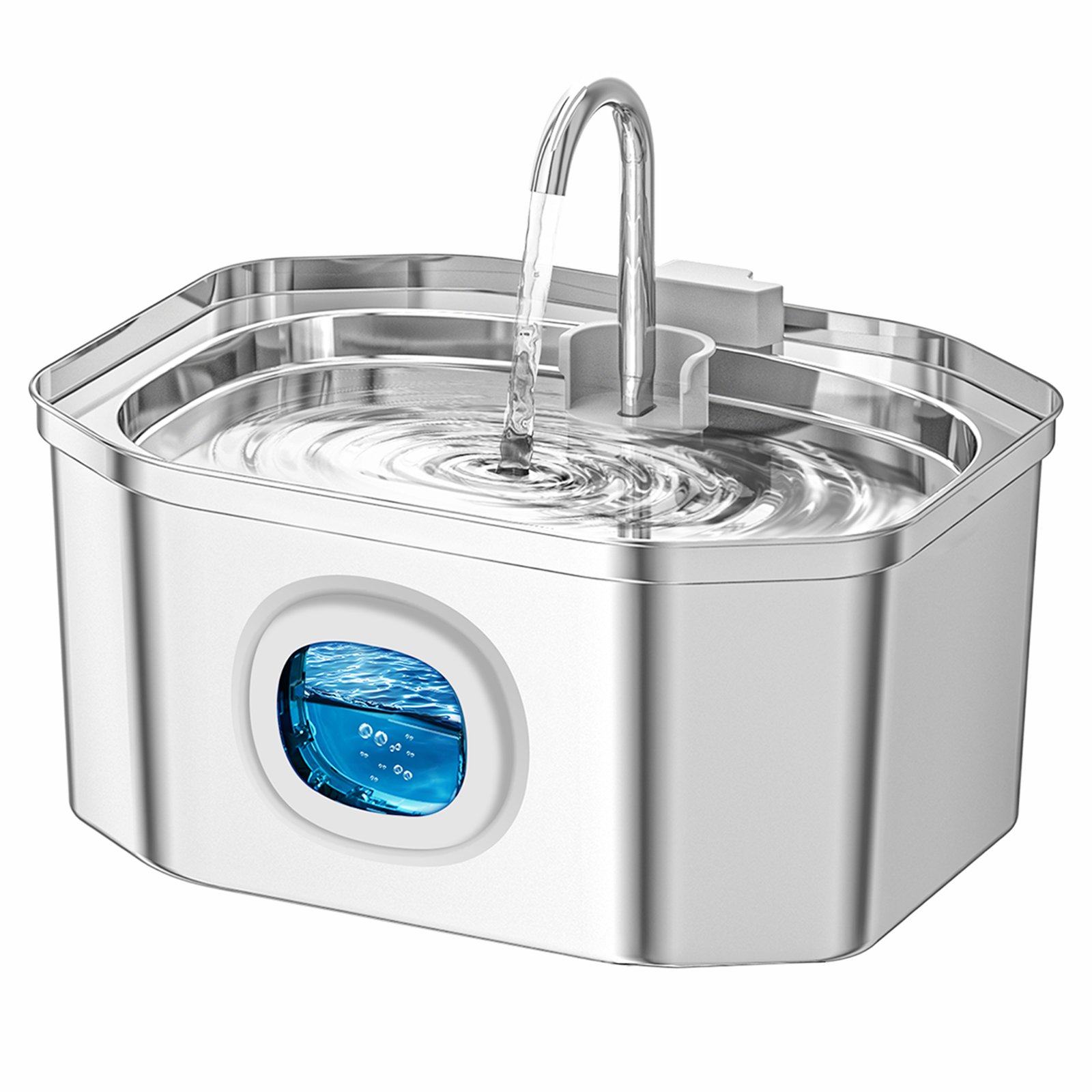
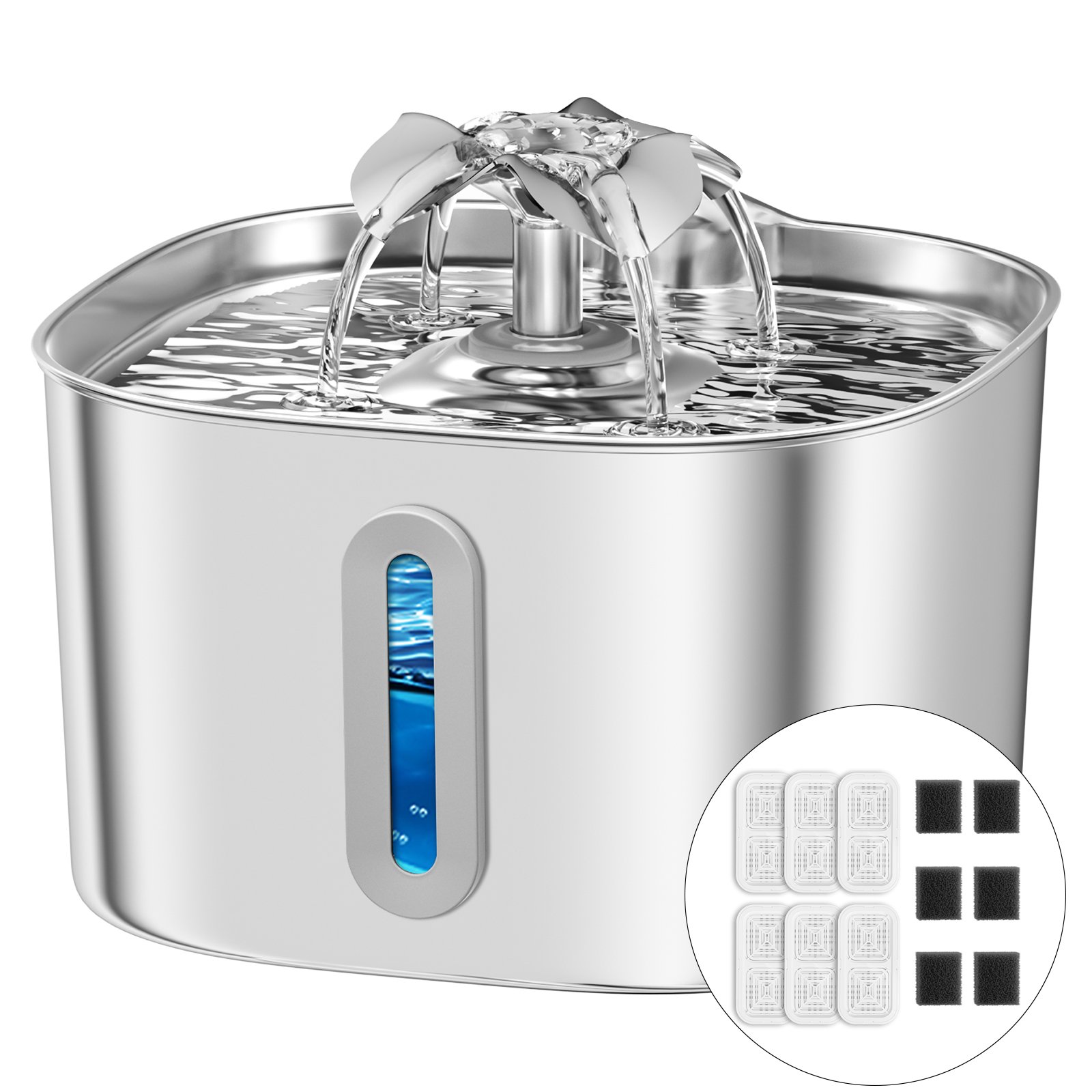
For a distributor or marketplace seller, stainless also means fewer returns on a higher ticket. Our octagonal Inox-3201 and four-leaf-clover INOX-WF-LC01 are both built on that logic.
304 vs 201: The Grade That Actually Matters
Within stainless, the grade is the whole game. Food-grade 304 contains roughly 8% nickel and resists corrosion in continuous water contact. 201 contains far less nickel — fine for dry goods, but in a fountain it develops surface rust and pitting within months. In product photos the two are indistinguishable.
Protect yourself three ways: demand mill certificates tied to batch numbers, run a 48-hour salt-water spot test on your samples, and treat a “304” quote that comes in dramatically below the field as 201 with paperwork. More vetting tactics in our manufacturer checklist.
How to Position Both in One Catalog
They are complements, not substitutes. Plastic is the entry price point that converts first-time fountain buyers; stainless is the upgrade with better margin and a better review profile. The move most catalogs miss: sell the filters. Both formats need replacement cartridges every 2–4 weeks, and consumables are where repeat revenue lives.
What to Verify When Sourcing Stainless Fountains
- Every water-contact part is 304 — not just the bowl. Ask for the parts list by material.
- Certificates on file: CE and RoHS for the EU, FCC for the US, with verifiable numbers.
- Welds and seams finished smooth — rough seams collect biofilm and defeat the hygiene argument.
- Pump noise specified in dB and actually tested; ≤25 dB is the current benchmark for bedroom-grade quiet.
- Replacement filters stocked by the same supplier — or your consumables margin walks to a third party.
Compare Both Stainless Models
Same platform, two silhouettes, one shared consumables inventory. Ask for the combined quote — bundles ship in one carton set.